
Sablefish is the fish that converts people who claim they don't like fish, and somehow almost no one is cooking it at home. It's naturally buttery, impossibly mild, and more forgiving in the pan than nearly any other fish you'll buy. You can stop searching… this is the one.
Why This Recipe Works
- The fat content is your friend. Sablefish has one of the highest omega-3 fat-to-flesh ratios of any white fish, which means it self-bastes as it cooks and stays rich even if you pull it a minute late.
- Lower heat, shorter window. Because of that fat content, high heat works against you, the outside chars before the inside sets. Medium heat lets the flesh turn slowly from translucent pearl to opaque white, which is exactly the cue you want.
- The skin renders. Score it, start skin-side down, and it goes from paper-thin and floppy to golden and slightly crisp. If you're serving toddlers, peel it off after cooking in about two seconds.
- The sauce is four ingredients. Butter, garlic, lemon, and a little fresh thyme. It works with the fish's natural flavor instead of burying it under a marinade.
- No miso required. The Nobu preparation is iconic, but it requires 24 to 72 hours of marinating. This version is weeknight-ready and lets the fish do the work.
Prep time: 10 minutes Cook time: 10 minutes Servings: 2 (easily doubled)
Ingredients
The Fish
- 2 wild-caught sablefish fillets (6–8 oz / 170–225g each), skin on
- 1 tablespoon avocado oil
- Kosher salt and freshly cracked black pepper
The Pan Sauce
- 3 tablespoon grass-fed butter
- 3 cloves garlic, thinly sliced
- 4–5 sprigs fresh thyme
- Juice of half a lemon (about 1.5 tablespoon / 22ml)
- Flaky sea salt, to finish
To Serve
- Extra lemon wedges
- Fresh flat-leaf parsley, roughly chopped
Directions
Dry the fillets and check for pin bones. Pat each fillet completely dry with paper towels. Then run a finger slowly along the centerline of the flesh, you'll feel any remaining lateral pin bones as small hard bumps. Pull them straight out with kitchen tweezers or needle-nose pliers. This step is non-negotiable if you're serving this to kids.
Score the skin. Using a sharp knife, make 3 shallow cuts through the skin at an angle, about 1 inch apart. Don't cut into the flesh, just through the skin. This keeps it from curling in the pan and gives the fat somewhere to render.
Season. Season both sides generously with kosher salt and freshly cracked black pepper. Set aside at room temperature for 5 minutes while the pan heats.
Heat the pan. Add the avocado oil to a heavy skillet (cast iron or stainless) over medium heat. You want the oil shimmering but not smoking, sablefish doesn't need or want a screaming-hot sear.
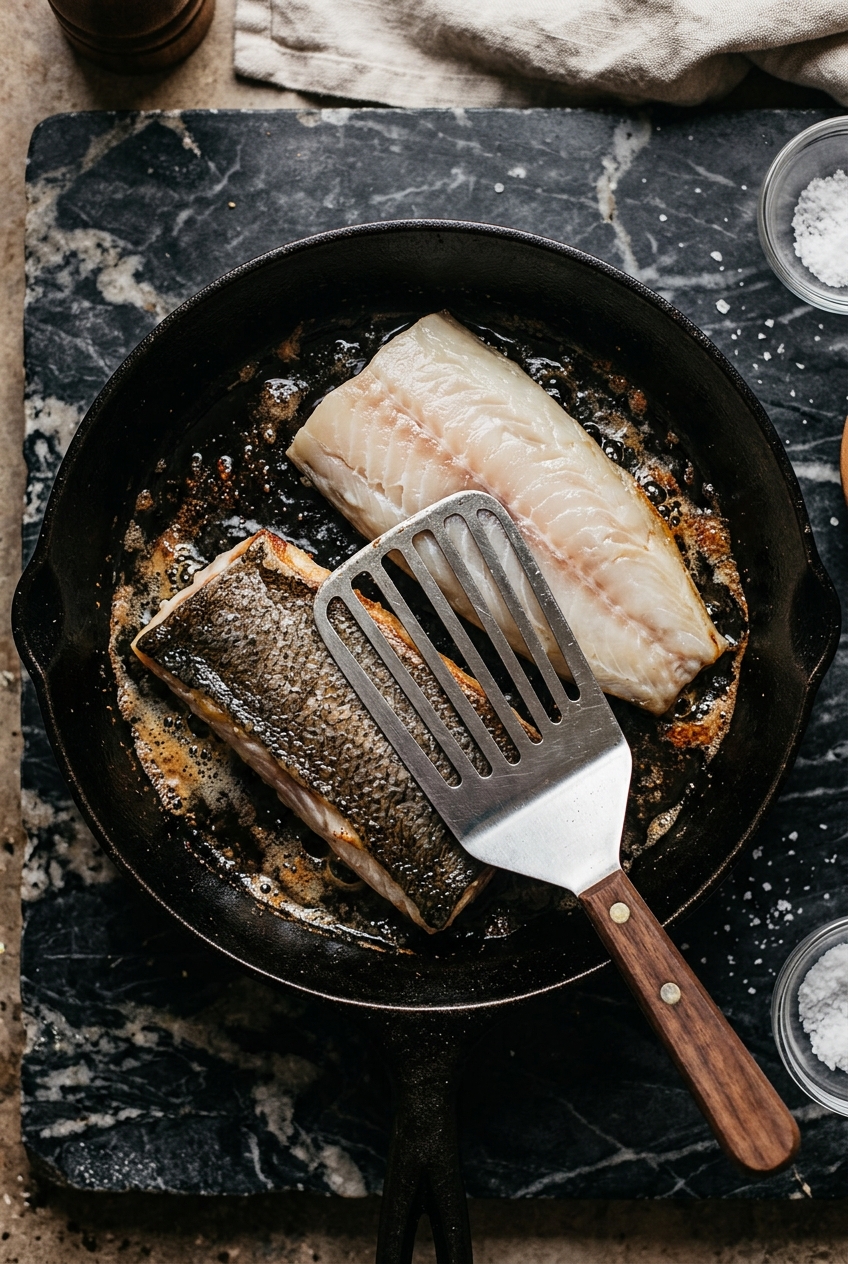
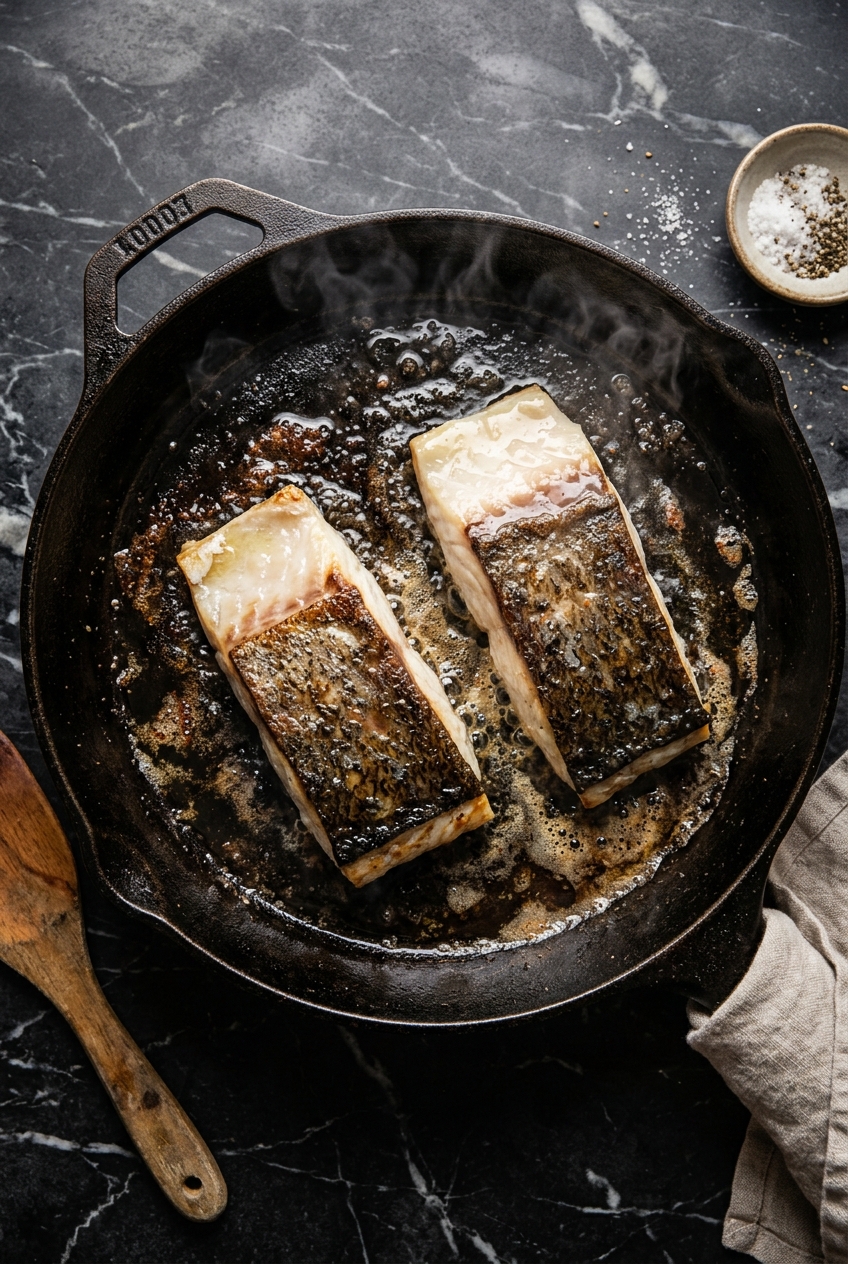
Cook skin-side down. Place the fillets skin-side down and press each one gently for the first 10 seconds to keep full contact with the pan. Cook undisturbed for 5 to 6 minutes. Watch the flesh: you'll see it turn from translucent along the bottom and slowly climb up the sides. When the opacity has crept about two-thirds of the way up the fillet, you're close.
Flip once. Flip the fillets carefully and cook flesh-side down for 1 to 2 minutes. The target internal temperature is 130 to 135°F (54 to 57°C). The flesh should be opaque white throughout with no translucent center. (Sablefish flakes at a lower temperature than leaner fish, if you're waiting for it to flake the way cod does, you've already gone too far.)
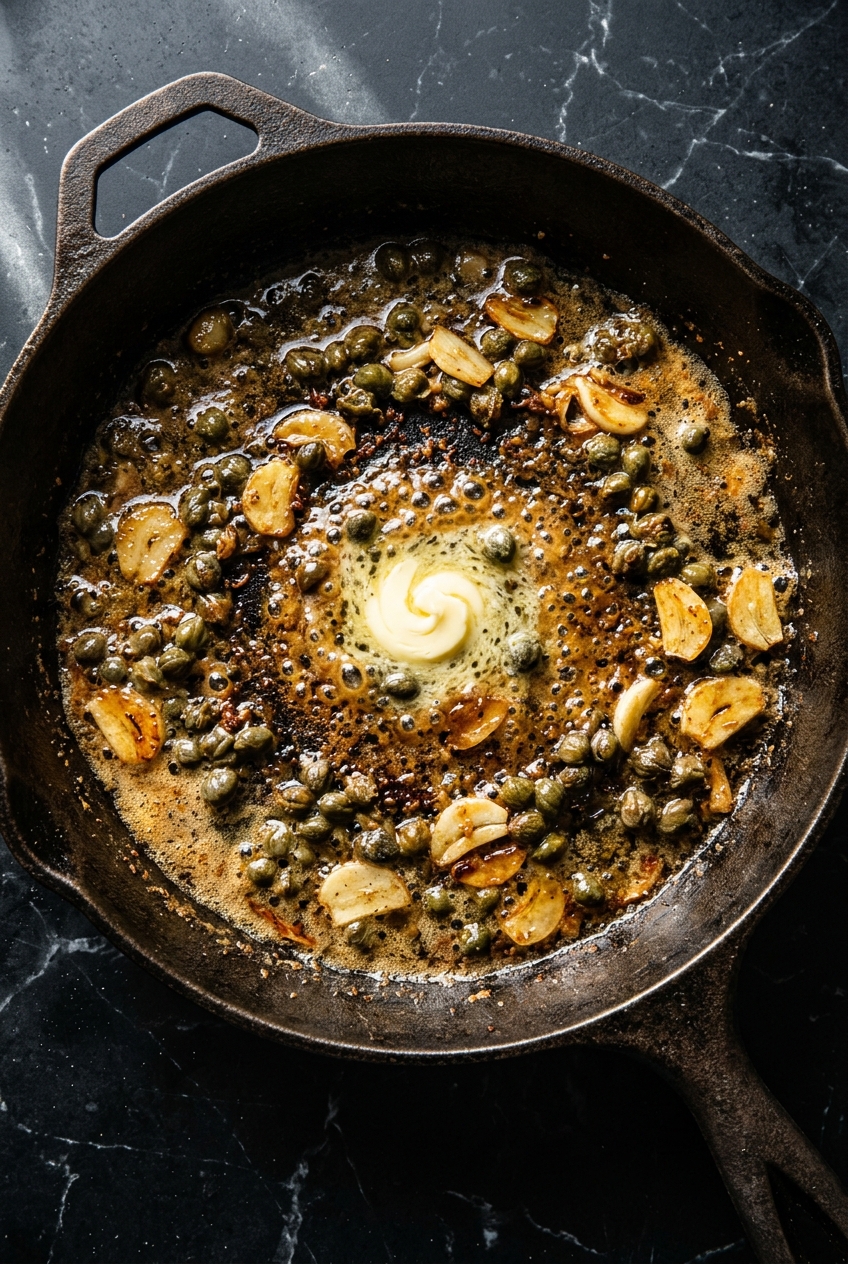
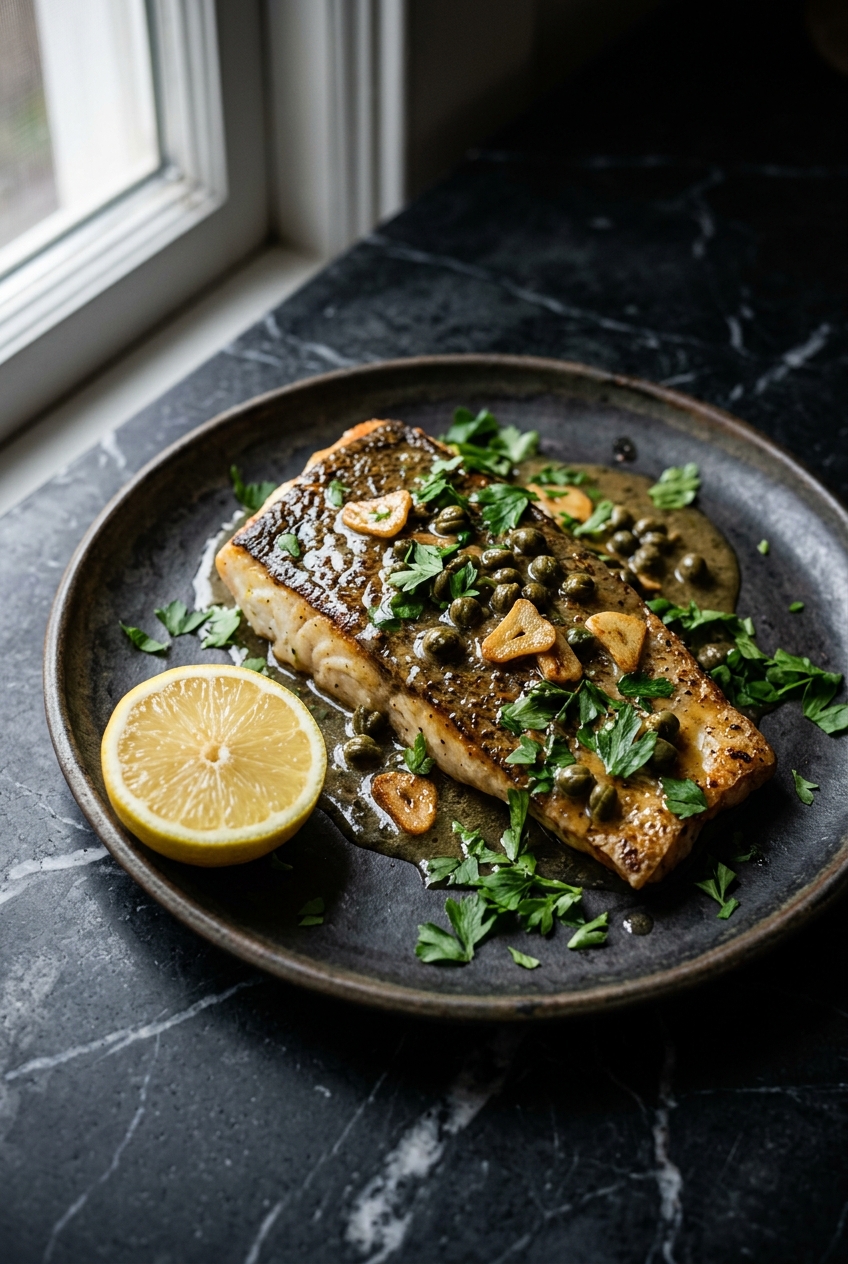
Remove the fish and build the sauce. Transfer the fillets to a warm plate, skin-side up. Reduce the heat to medium-low and add the butter, garlic, and thyme to the same pan. Let the butter melt and the garlic soften, about 90 seconds, until the garlic is just barely golden and the thyme smells like it's woken up.
Add the lemon. Squeeze in the lemon juice and swirl the pan. The sauce will hiss and tighten slightly. Taste it. It should be bright, a little rich, and just garlicky enough.
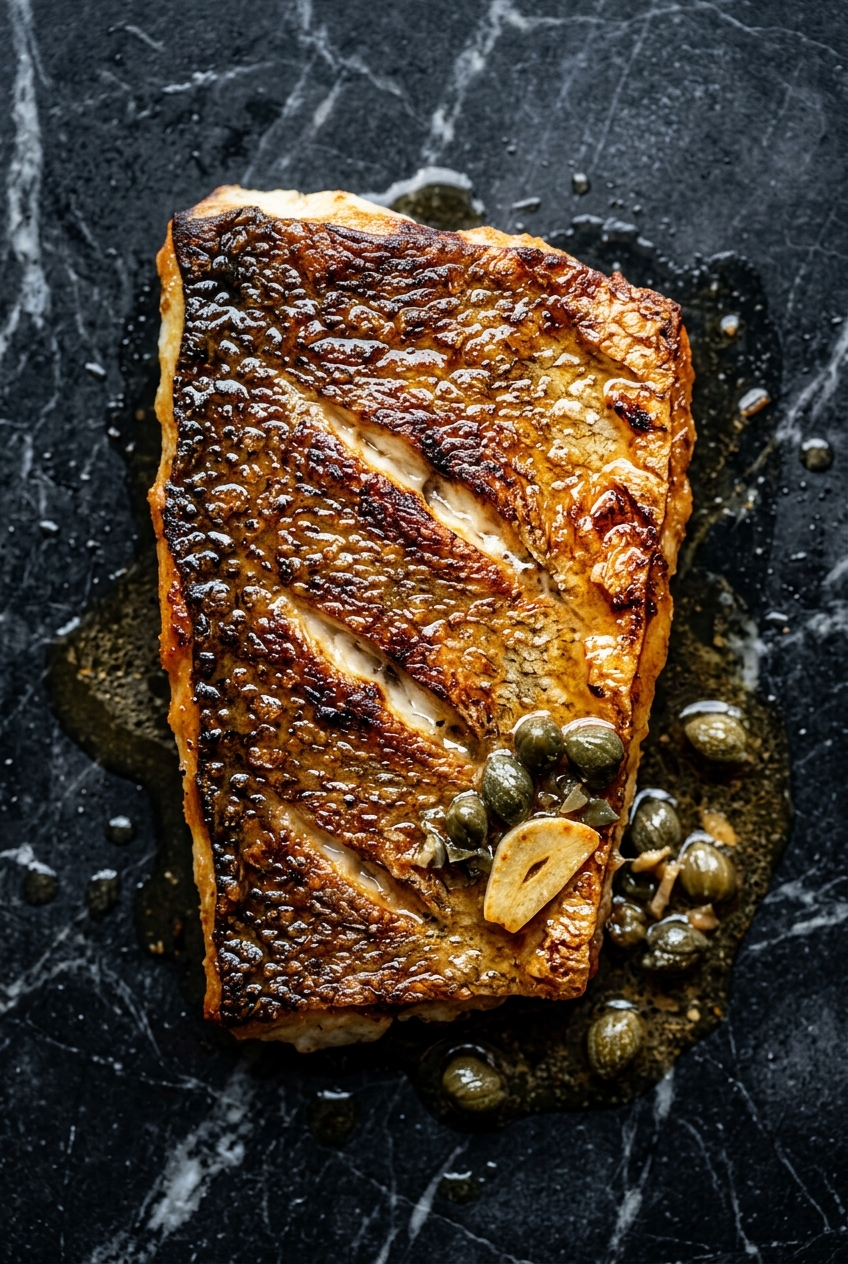
Spoon and serve. Pour the pan sauce directly over the fillets. Finish with flaky sea salt and a scatter of fresh parsley. Serve with extra lemon wedges on the side. (For toddlers: peel the skin off now, it lifts away cleanly, and spoon a little extra sauce over the fish as a dip. It disappears.)
Notes
Sourcing: Look for wild-caught Alaskan sablefish, MSC-certified if your fishmonger carries it. Farmed sablefish exists but the fat profile and flavor are noticeably different. Ask at the fish counter, it's sometimes labeled black cod.
Skin-on vs. skinless: Cook skin-on. The skin protects the flesh from direct heat and renders into something genuinely good. If you bought skinless fillets, reduce the first side cook time by about a minute and watch the flesh more closely.
Storage: Cooked sablefish keeps in the fridge for up to 2 days in an airtight container. Reheat gently in a covered skillet over low heat with a small knob of butter, do not microwave it. The fat content means it reheats better than most fish, but it goes from good to dry fast if you push the temperature. Leftover sablefish also works well flaked cold over a simple green salad.
Freezing: Raw sablefish freezes well for up to 3 months. Thaw overnight in the fridge, never on the counter, and dry thoroughly before cooking.
For toddlers: This is one of the genuinely great fish for kids. No strong flavor, no dry texture, and the lemon butter sauce doubles as something they'll want to dip everything else in too. Just confirm the pin bones are completely out before it hits the plate.
FAQ
What is sablefish and is it the same as black cod? Yes, sablefish and black cod are the same fish. "Black cod" is the common market name, but it's not actually a cod at all. It's a deep-water Pacific fish (Anoplopoma fimbria) with a fat content closer to salmon than to any white-fleshed cod, which is exactly what makes it cook so differently.
How do you know when sablefish is done cooking? The clearest visual cue is the color change: raw sablefish is a translucent, pearlescent gray-white, and cooked sablefish turns fully opaque white. The internal temperature you're aiming for is 130 to 135°F (54 to 57°C). Don't rely on the flake test, sablefish's high fat content means it flakes at a lower temperature than most white fish, and by the time it flakes the way you'd expect cod to flake, it's already overcooked.
Should you remove the skin from sablefish before cooking? Leave it on for cooking. The skin holds the fillet together, protects the flesh from direct heat, and renders into something worth eating. Score it first so it doesn't curl, start skin-side down, and it comes out golden and slightly crisp. If you're not into eating it, peel it off after cooking, it lifts away in one clean piece.
Why is sablefish so expensive? Wild-caught Alaskan sablefish is harvested under strict quota limits, which keeps the population sustainable but also keeps supply relatively tight. It's also a deep-water fish that requires specific gear and longer trips to catch. Expect to pay a premium, which is exactly why you don't want to treat it like a lean white fish and overcook it in a hot pan.
Is sablefish a good fish for kids? It's one of the best. The naturally high fat content gives it a buttery, mild flavor with none of the sharpness that turns kids off fish. It flakes into soft, tender pieces with no dry texture, and when filleted properly it's essentially boneless (just check for pin bones before serving). The lemon butter sauce in this recipe doubles as a dip, which helps.
Leave a Reply